See schedule for times and locations of awardee talks.
2026 Graphics Achievement Award:
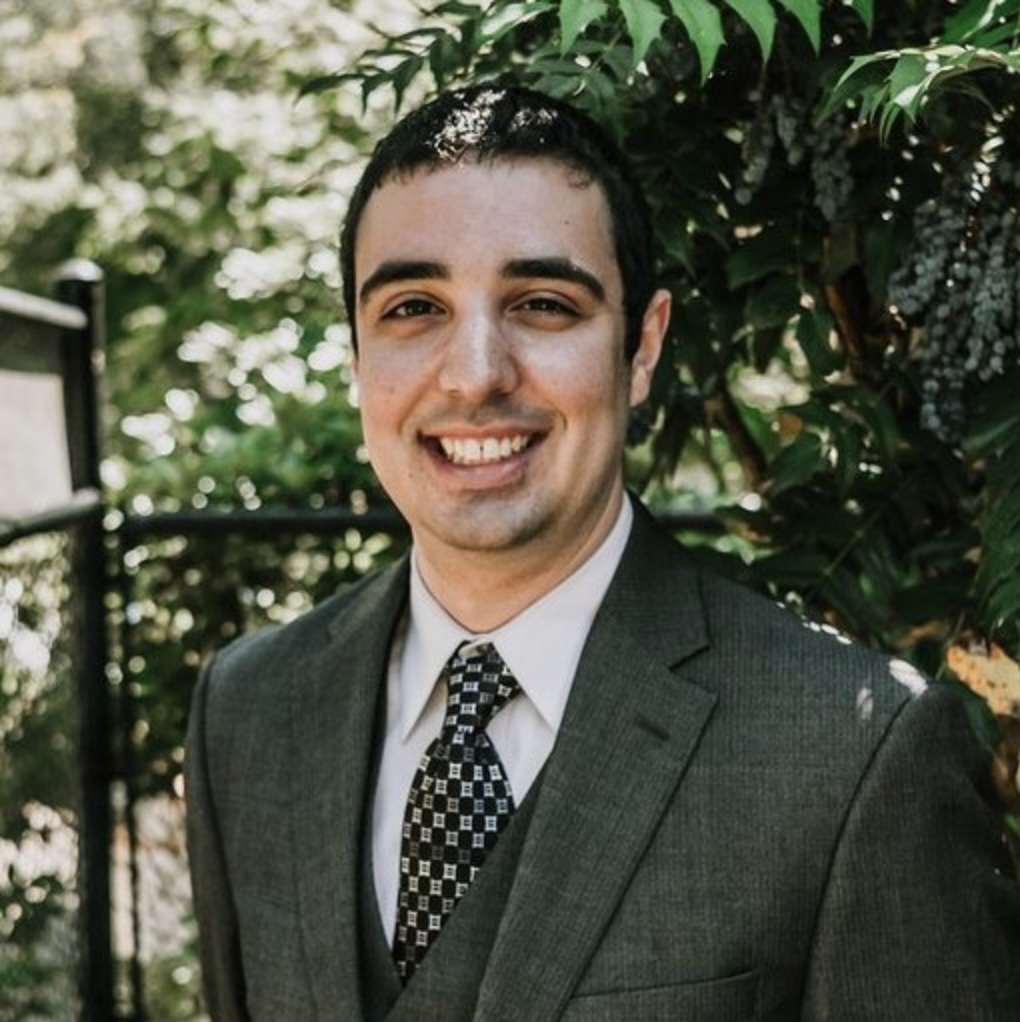
Faramarz Samavati
A 2026 CHCCS/SCDHM Achievement Award of the Canadian Human-Computer Communications Society is presented to Prof. Faramarz Samavati for his sustained creative contributions to computer graphics, modeling, visualization, and education.
Full Citation
Faramarz has made significant contributions along three major axes: sketch-based interaction and modeling, Digital Earth, and parametric curves and surfaces. He is a central contributor to sketch-based interaction and modeling: his 2009 Computer & Graphics article “Sketch-Based Modeling: A Survey” and his 2010 book co-edited with Joaquim Jorge Sketch-Based Interfaces and Modeling has served as a core reference for the field for almost two decades. More recently, his work addresses fundamental representations for the Digital Earth. His Discrete Global Grid System (DGGS) is a cornerstone of efficiency, multi-resolution, memory-aware footprint, and flexibility for massive geo-referenced datasets for applications including remote sensing, geography, and agriculture. These and other contributions are built on a strong mathematical basis established through his insights into multi-resolution parametric curves and surfaces, including his fundamental reverse subdivision rules.
Faramarz holds a doctorate in Mathematical and Computer Science from Sharif University of Technology in Tehran, Iran. His dissertation research was recognized with the Kharazmi Award for Best PhD Thesis in Basic Sciences in Iran, the Mehr-Abadi Award for Best Young Researcher at his university, and the Best Thesis Award in his department. His career in Canada started in 1997-1998 as a visiting research scholar in the Computer Graphics Laboratory at the University of Waterloo.
His research has been supported by multiple agencies, including Mitacs Accelerate, NSERC Alliance, Discovery, CRD, and Engage, New Frontiers, and the GRAND NCE, where he played a leadership role. His research has been recognized with a large number of awards, including a Mitacs Innovation Award for Outstanding Research Leadership (2025) for his work on DGGS, a University of Calgary Established Career Scholarship Excellence Award (2020), an ASTech Finalist for Outstanding Leadership in Alberta Technology (2017), a Peak Scholar Award (2014), and a Digital Alberta Award (2013). His research publications have won multiple awards, including a Digital Alberta Award in 2013 for his work on sketching, as well as numerous Best Paper Awards at Expressive 2017, Cyberworlds 2015 and 2014, IEEE CG&A 2011, and CGI 2011.
Faramarz has been a professor in the Department of Computer Science at the University of Calgary since 2001, where he has served as Associate Head of Graduate Affairs and as Graduate Director.
A major contribution of Prof. Samavati to computer science in Canada and beyond comes from his dedication to teaching and training the next generation of scientists in computer graphics. He has provided dedicated supervision and mentorship at all levels to his 4 post-doctoral fellows, 18 doctoral students, 49 master’s students, and 33 bachelor’s students. Unsurprisingly, he has received numerous teaching awards and nominations from his fellow professors and former students. His supervision has been recognized by a Great Supervisor Award, a Graduate Supervision Excellence Award, an Outstanding Achievement in Supervision Award, and a nomination for a Killam Graduate Supervision and Mentorship Award. His classroom teaching has been recognized by a Teaching Award and an Excellence in Teaching Award.
Prof. Samavati’s has actively participated on program committees and editorial boards of the major forums in computer graphics, including co-chairing Graphics Interface 2013 and chairing the 2009 ACM/Eurographics Symposium on Sketch-Based Modeling and Interaction for which he received an ACM Recognition Service Award. He has served as editor, guest editor, and topic editor for multiple journals on geo-information, remote sensing, and Digital Earth.
2026 HCI Achievement Award:
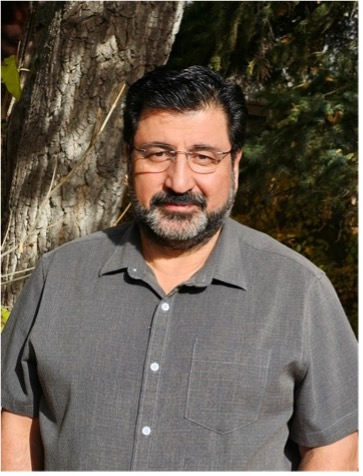
Nicholas Graham
A 2026 CHCCS/SCDHM Achievement Award of the Canadian Human-Computer Communications Society is presented to Prof. Nicholas Graham for his sustained creative contributions to HCI, computer supported cooperative work, and interactive game development.
Full Citation
Nick Graham is a professor at Queen’s University where he leads the EQUIS Laboratory for innovative gaming technologies. He holds a Doctorate of Engineering in Software Engineering from the Technical University Berlin (1995) where he explored declarative programming for user interface development. He has contributed to the launching of two new ACM SIGCHI conferences, acting as the inaugural General Chair and Steering Committee Chair for the ACM Symposium on Engineering Interactive Computing Systems (EICS) in 2009 and then as the inaugural Technical Program Chair of the ACM Symposium on Computer-Human Interaction in Play (CHI PLAY) in 2014. He is a member and former chair of IFIP Working Group 2.7/13.4 on User Interface Engineering.
Dr. Graham’s work lies in the intersection of software engineering and human-computer interaction. He has made contributions to the design of software architectures for interactive systems, to simplifying the programming of consistency maintenance in multiplayer games and other groupware systems, and to the modeling of adaptive user interfaces.
Nick’s latest work focuses on the design, implementation, and evaluation of games that seek to do more than entertain. In collaboration with Holland Bloorview Kids Rehabilitation Hospital, his group developed the Liberi Exergame, enabling children with neurodevelopmental disorders to engage in physical activity together. Liberi has been trialed in homes, schools, and clinical environments. Most recently, he has worked in demonstrating how augmented reality can support experiential learning, as shown through the Northeye game for teaching medieval history to elementary school children.
Many of Graham’s research projects involve close collaboration with experts in domains in which he and his students apply game technology in novel ways to support learning or training activity intended to improve health outcomes. These include physical therapy after spinal cord injury, physical activity for children with Autism Spectrum Disorder or Fetal Alcohol Syndrome, and post-operative exercise for children with cerebral palsy. A key element is carefully matching the difficulty of the game to the abilities of the players to increase engagement and improve motivation.
Dr. Graham has engaged in innovative teaching at Queen’s, including acting as academic co-director for the Master of Digital Product Management program jointly run between Computing and Business, and creating the Game Development option in Computer Science. This has been recognized through the MDPM and the Howard Staveley teaching awards.

2025 Alain Fournier Ph.D. Dissertation Annual Award:
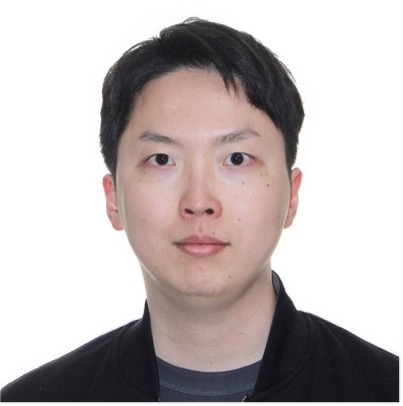
Ryusuke Sugimoto
Ryusuke Sugimoto is the recipient of the 2025 Alain Fournier Award for Outstanding Doctoral Dissertation in Computer Graphics. Dr. Sugimoto’s dissertation, titled, Toward General-Purpose Monte Carlo PDE Solvers for Graphics Applications, makes outstanding contributions to the field of Computer Graphics.
Full Citation
In his doctoral dissertation, Dr. Sugimoto has approached numerical methods for physics-based simulation from an entirely novel angle: Monte Carlo (MC) methods for solving partial differential equations (PDEs). He first tackled computational fluid problems by solving their underlying PDEs — the Navier-Stokes equations — by developing a stochastic formulation enabling MC evaluation. He introduced the first numerically validated MC method for fluid simulation based on a vorticity formulation, and subsequently extended this framework to velocity-based formulations. Dr. Sugimoto then developed methods for PDEs with general boundary conditions via the walk-on-boundary approach, bridging the mathematical and algorithmic gap between simulation and MC rendering. Finally, he designed MC solvers for PDEs defined on 3D surfaces and curves, as well as for additional kinds of PDEs. His solutions go beyond computer graphics, and his contributions should have a long-lasting impact on numerical computing in general.
Dr. Sugimoto has published five SIGGRAPH and SIGGRAPH Asia papers as first author, two as journal papers. His paper in the Symposium on Computer Animation (SCA) won the Best Paper Award.
He completed a B.Sc. in Computer Science and Mathematics with First Class Honours at the Hong Kong University of Science and Technology (HKUST). He completed a PhD in Computer Science at the University of Waterloo under the supervision of Professors Toshiya Hachisuka and Christopher Batty. He is now a post-doctoral researcher at the Institute of Science and Technology in Austria (ISTA) with Professor Chris Wojtan. During his studies, he completed internships at Adobe, Side Effects, and Dayta AI.
He has been a reviewer in the top journals and conferences. He served as the 2026 poster chair at SCA and is a member of the program committee of EGSR 2026.
2025 Bill Buxton Best Canadian HCI Dissertation Award:
Blue (Georgianna) Lin
The recipient of the 2025 Bill Buxton Outstanding Doctoral Dissertation Award, which is awarded to an outstanding doctoral dissertation completed at a Canadian university in the field of Human-Computer Interaction, is Dr. Blue (Georgianna) Lin.
Full Citation
Dr. Lin’s doctoral dissertation on Multimodal Tracking with Ubiquitous Devices to Foster Holistic Menstrual Health Sensemaking, makes significant contributions to human-computer interaction by advancing the design of technologies that support women in understanding complex, longitudinal personal health data. Her work addresses a critically underserved area in HCI, and demonstrates how multimodal sensing technologies can enable more holistic and personalized health sensemaking. A key strength of Dr. Lin’s dissertation is its methodological rigor and scope. Across multiple studies, including longitudinal deployments, she combined qualitative and quantitative approaches to generate deeply grounded design insights. Her work also carefully incorporates diverse participant perspectives across ages and demographics, strengthening the generalizability and impact of her findings.
Beyond empirical contributions, Dr. Lin advances conceptual understanding in HCI by articulating design requirements and frameworks that support users’ evolving sensemaking processes. Her research highlights how current personal informatics tools often reinforce narrow views of health, and she demonstrates how systems can instead support richer, more integrated understandings that better align with users’ lived experiences and needs. The committee also recognizes the broader significance of this work in addressing issues of equity and representation in technology design. By focusing on menstrual health, an area historically overlooked in computing, Dr. Lin’s research contributes to reducing stigma and expanding access to meaningful, user-centred health technologies.
Dr. Lin is an interdisciplinary researcher whose work spans human-computer interaction, machine learning, and health informatics. She recently completed her PhD in Computer Science at the University of Toronto under the supervision of Dr. Alex Mariakakis and Dr. Khai Truong, and is currently a postdoctoral research fellow at Columbia University. She earned her bachelor’s and master’s degrees in 2019 and 2020, both in Computer Science at the Georgia Institute of Technology. Her research focuses on designing systems that help people interpret and act on complex multimodal data, particularly in the context of personal health. She has received several competitive awards, including a Google PhD Fellowship, Georgia Tech GVU Distinguished Masters Student Award, and multiple University of Toronto research recognitions. Her work has been published in leading venues such as ACM CHI, ACM IMWUT, npj Digital Medicine, and ACM Transactions on Healthcare.
The Bill Buxton Award was established in 2011 in honour of Canadian researcher, designer, and musician William (Bill) Buxton, O.C. The award, which was founded with support from an anonymous donor, recognizes emerging researchers who — like Bill — seek to do deep, insightful, and rigorous work that challenges how academics and practitioners think, and inspires them to do things differently.
The award is determined through a juried process by a selection committee consisting of accomplished researchers in Human-Computer Interaction, organized this year by Dr. Celine Latulipe (University of Manitoba). The 2026 jury consisted of Dr. Pourang Irani (University of British Columbia – Okanagan), Dr. Miguel Nacenta (University of Victoria), Dr. Stacey Scott (University of Guelph), and Dr. Wesley Willett (University of Calgary).

2026 Service Award:
Paul G. Kry
The 2026 CHCCS/SCDHM Service Award is presented to Professor Paul Kry for his wisdom and guidance to the organization during a period in which the CHCCS community and the Graphics Interface conference (GI) faced challenges that required strong leadership to navigate the many changes that were necessary to adapt to rapidly evolving circumstances over a tumultuous decade. The continuing success and strong reputation that the GI conference enjoys today is in no small part due to Paul’s efforts over many years.
Full Citation
Paul served as President of CHCCS from 2013 through 2025 – the longest on record after founding President Wayne Davis – and he actively continues as Past President. He was the first CHCCS President from the “new wave” of Canadian researchers who came of age when the GI was a well-recognized and important international conference for computer graphics, visualization, and human-computer interaction research. Paul was the graphics co-chair and served as general chair for Graphics Interface 2014 at Université de Montréal and École Polytechnique de Montréal.
Paul has worked actively to maintain GI as a vibrant, high-quality venue that showcases Canadian and international research. Starting in 2005, GI was often partnered with the Canadian AI and computer vision & robotic communities as the AI/GI/CRV triple conference. In 2020, Paul helped transition the GI conference back to a stand-alone conference to better focus on the needs of the computer graphics, visualization, and human-computer interaction research community. He actively recruited new leaders for the conference and renewed the membership of the executive committee.
In his role as President of CHCCS, Paul was a key factor in keeping the GI conferences alive, active, and relevant throughout the COVID years and beyond, when face-to-face meetings had to be temporarily replaced with virtual meetings that might not foster the communal spirit characteristic of traditional annual GI conferences. Paul helped ensure continuity as the conference adjusted and then began its graceful return to in-person meetings while experimenting with hybrid models in the wake of the COVID experience.
Paul’s contributions include suggestions that have improved how the conference and the organization support the Canadian research community, including helping bring about improvements to the CHCCS website and the open‑access digital library of past conference proceedings. To provide a lively forum that complemented the reviewed paper conference track, he initiated an invited speaker track in 2015 and he introduced the “interview” style for Achievement Award recipients to talk about their careers in an informal setting. Under his presidency and encouragement, CHCCS introduced Early Career Researcher Awards to recognize our community’s rising stars.
Beyond GI, Paul has demonstrated a sustained commitment to serving and strengthening the broader graphics and animation research community. Through long-standing leadership roles in ACM SIGGRAPH, he helped strengthen ties between CHCCS and ACM, including ensuring the continued archival availability of GI proceedings in the ACM Digital Library. He has served on the SIGGRAPH executive committee and as chair of the SIGGRAPH specialized conferences committee, co-chaired the ACM/EG Symposium on Computer Animation on multiple occasions, and regularly fosters collaboration through computer animation workshops at McGill’s Bellairs Research Institute.
Paul received a B.Math. (1997) in computer science with electrical engineering electives from the University of Waterloo, and an M.Sc. (2000) and Ph.D. (2005) in computer science from The University of British Columbia. During his doctoral work he was a visiting researcher at Rutgers University. He was a postdoctoral fellow at INRIA Rhône-Alpes and Université René Descartes. He has been a faculty member in the School of Computer Science and the Centre for Intelligent Machines at McGill University since 2008. His research interests are in physically based animation and simulation, with a focus on fluids, deformable bodies, contact, and friction, and an emphasis on differentiable simulation, reduced-order methods, and the integration of machine learning with physical models.

2026 Graphics Early Career Researcher Award:
Ali Mahdavi-Amiri
The CHCCS 2026 Early Career Researcher Award (Graphics) is presented to Dr. Ali Mahdavi-Amiri for his pioneering contributions to geometric modeling, digital fabrication, and generative 3D methods.
Full Citation
Ali Mahdavi-Amiri is an Assistant Professor in the Simon Fraser University School of Computing Science and the Director of the Master of Science in Professional Computer Science program. He is also the Vice President of Research at MARZ VFX, a Canadian startup focused on AI applications in visual effects. His research focuses on Computer Graphics, with specialties in Geometric Modeling, Digital Fabrication, Machine Learning, and Computer Vision. His work has been published in leading venues including SIGGRAPH, SIGGRAPH Asia, ACM Transactions on Graphics, CVPR, ICCV, ECCV, ICLR, NeurIPS, and Computer Graphics Forum. His research has also been recognized through several prestigious awards, including the NSERC Postdoctoral Fellowship, J.B. Hyne Research Innovation Award, and Michael A. J. Sweeney Award.
The awards committee notes with distinction his impactful publication record in premier venues, including SIGGRAPH, CVPR, and NeurIPS, his extensive international collaborations, as well as his deep roots in the GI community as a former Michael A. J. Sweeney Best Paper winner. This award recognizes his technical excellence, his commitment to educating the next generation of graphics researchers, and his burgeoning leadership as a world-class researcher in computer graphics.

2026 HCI Early Career Researcher Award:
Alex Mariakakis
The CHCCS 2026 Early Career Researcher Award (Human-Computer Interaction) is presented to Dr. Alex Mariakakis for his significant contributions to the field of Human-Computer Interaction (HCI), particularly at the intersection of Health and HCI.
Full Citation
Alex Mariakakis is an Assistant Professor in the Department of Computer Science at the University of Toronto. He runs the Computational Health and Interaction (CHAI) lab, which leverages ubiquitous and emergent technologies to address problems related to people’s health and wellbeing. He is also an Affiliate Scientist at the KITE Research Institute and an Education Faculty Affiliate within T-CAIREM, which has enabled his passion for digital health research to influence the clinical landscape in the Greater Toronto Area. His work has garnered multiple Best Paper Awards at top computer science venues like ACM CHI and ACM COMPASS, as well as significant attention from media outlets ranging from the BBC to Cosmo Magazine.
Dr. Mariakakis has an outstanding publication record across numerous top-tier HCI venues, including receiving nine paper awards – a very notable achievement! Several of Dr. Mariakakis’ research outputs have also brought contributions to industry, with five patents awarded. At the same time, Dr. Mariakakis’ research is of valuable societal benefit, as recognized through work with the Bill and Melinda Gates Foundation. This has been achieved through leading large collaborative teams across multiple universities, including a significant cohort of graduate student authors.